
Anchor the concept in service and menu
State the meal occasion, price position, service style, dwell time, table turnover, party sizes, and menu behavior before collecting interiors. These conditions change seating, light, sound, materials, and staff movement.
Map the guest and staff routes
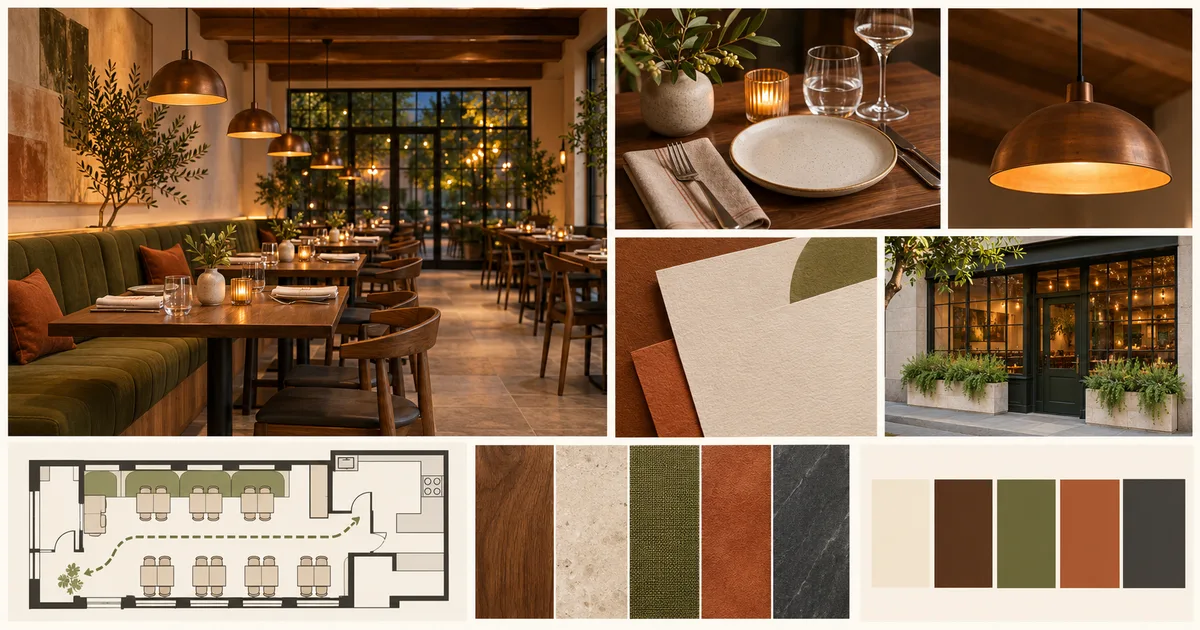
Show arrival, waiting, seating, ordering, service, payment, toilets, and exit beside the staff route between kitchen, pass, bar, storage, and tables. A coherent atmosphere cannot compensate for blocked or conflicting circulation.
Choose materials for repeated use
Compare finish, joint, edge, cleaning, slip, replacement, stain, heat, noise, and low-light behavior. Place actual samples and supplier records beside inspiration before a material becomes a specification.
Evidence to collect before review
- Audience, menu, service style, price position, and meal occasion
- Storefront, arrival, seating, service route, payment, and accessible circulation
- Table setting, menu handling, light, acoustics, and evening identity
- Durability, cleaning, replacement stock, cost, lead time, and approvals
When a restaurant concept board ignores operations
Rework the board if it shows only empty dining rooms, uses decorative lighting without task requirements, ignores table spacing and service routes, or specifies fragile finishes without cleaning evidence. The board should connect every visual choice to the guest promise and an operating condition.
Questions for the decision review
Walk through a busy service from arrival to closing and ask where the visual direction supports or obstructs the work.
Use evidence, not preference
- What should a guest understand before opening the door?
- Can staff serve and clear every table without route conflict?
- How do menu, table, light, sound, and materials express the same position?
- Which samples, codes, costs, access checks, or operational trials remain open?
Move from concept into design and operations
Record the measured plan, seating assumptions, route tests, material schedule, fixture references, lighting roles, acoustic tasks, cleaning method, replacement strategy, cost status, lead times, and approval owners. Keep food safety, building, fire, licensing, accessibility, and employment requirements in the appropriate professional records.
What this template does not prove
A concept board cannot establish code compliance, food safety, accessibility, acoustic performance, capacity, staff safety, cost, or commercial viability. Use qualified local professionals and real operational tests.
Stress-test the guest and service journey
Review arrival, seating, ordering, service, payment, cleaning, and closing as one system. Use the event direction quality review, then record reference status in the material and image source register.