
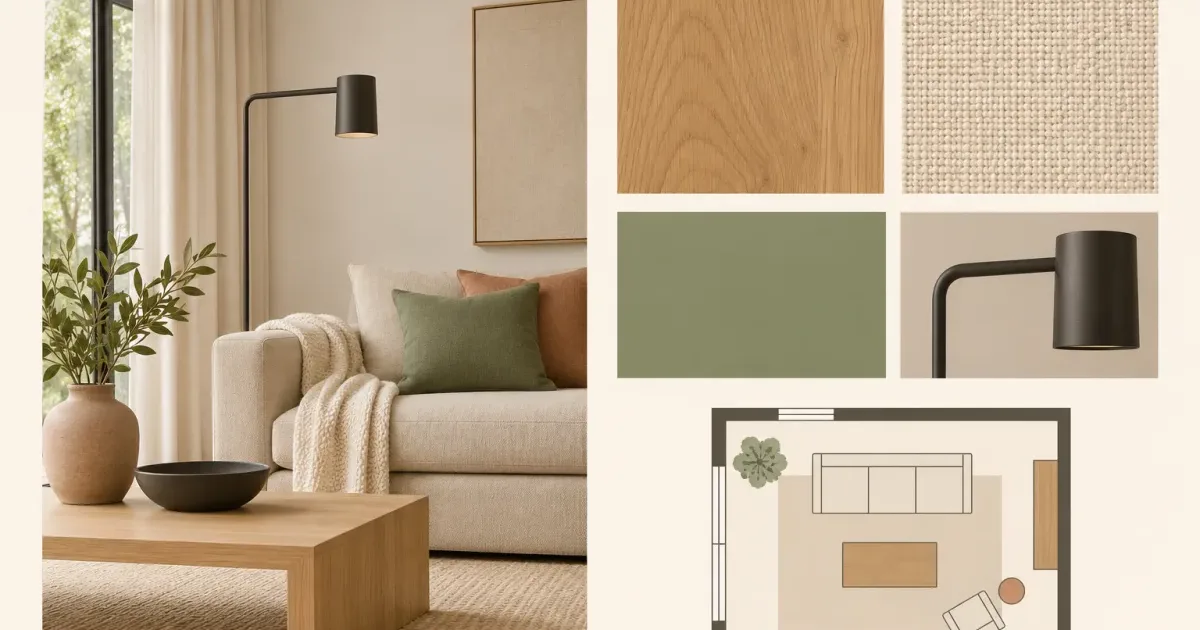
Start with what cannot move
Add room dimensions, windows, doors, daylight, fixed floors, heating, services, and any retained furniture before choosing a style direction.
Show materials at honest visual weight
Let walls, floor, cabinetry, or major upholstery occupy more board area than a small fitting. Add supplier and sample notes beside decisions that need physical validation.
Use the template to remove options
Write what the direction excludes, then compare samples in the room. A useful board narrows purchasing and design choices instead of storing every attractive reference.
Evidence to collect before review
- Measured room and fixed conditions
- Large surfaces and primary materials
- Daylight and evening-light evidence
- Storage, upkeep, budget, and sample status
Warning signs in an interior board
Rework the board if small accessories dominate the page, every material is shown at equal size, the room plan is absent, or the images assume light the room does not receive. A style label such as calm or natural is not a specification. The board should distinguish existing conditions, proposed choices, physical samples still needed, and items already approved.
Questions for the decision review
Review the direction in the actual room and ask questions that lead to a measurable choice.
Use evidence, not preference
- Which fixed condition does each major choice respond to?
- What is the dominant surface when the room is viewed from the entrance?
- Which sample changes most between daylight and evening light?
- What remains uncertain about fit, delivery, care, or budget?
Turn the room direction into a usable schedule
After approval, record each selected item with dimensions, supplier, product or sample reference, finish, quantity, cost status, lead time, maintenance note, and approval condition. Attach the measured plan and lighting notes. This prevents a later purchaser or contractor from treating a similar-looking image as the selected material.
What this template does not prove
The room image cannot confirm fit, comfort, delivery, fire performance, durability, cost, or color under the actual light. Measure the room and review physical samples before committing money.
Test the room direction before purchasing
Compare the board with the measured room, actual light, and physical samples. Use the interior mood board audit, then record reference status in the material and image source register.